Creating Spaces Employees Want to Return To
Since the COVID-19 pandemic, our attitudes toward work have fundamentally shifted. Increasingly, the concept of ‘work’ is viewed as something that we do, rather than a place that we go to each morning.
This has helped to shift the wants, needs, and attitudes of the workers themselves. The right technology, a flexible approach to working hours, and other innovations might make a difference. But, for employees looking to foster positive attitudes, retain valuable team members, and generally create a productive work environment, it’s worth thinking about more fundamental questions.
At the top of the list is probably this: how are you going to shape a workplace that employees can thrive in?
Spaces that inspire collaboration
Once upon a time, workers in the average office space found themselves forever enclosed by the walls of a fixed cubicle. Then, open-plan offices had their spell in the sun.
Today, we tend to be more aware of the fact that different environments suit different kinds of work. If you’d like to settle down for an hour or two of deep work, then an enclosed space might be preferable; if you need to be able to connect with other people, and collaborate with them, then having open spaces for brainstorming, perhaps equipped with a whiteboard and a coffee machine, might be better.
Incorporate everyday comforts
A good working environment is often an agglomeration of small details. When the lighting is even and natural, we tend to be more focused and productive. A similar difference can be made by the seats we occupy, the aesthetics of the space itself, and special facilities like premium-quality coffee machines. In the latter case, a little investment can signal to a workforce that their contribution and welfare are valued by the company. That’s leaving to one side the more direct productivity benefits of caffeine as a stimulant.
Well-being as a design principle
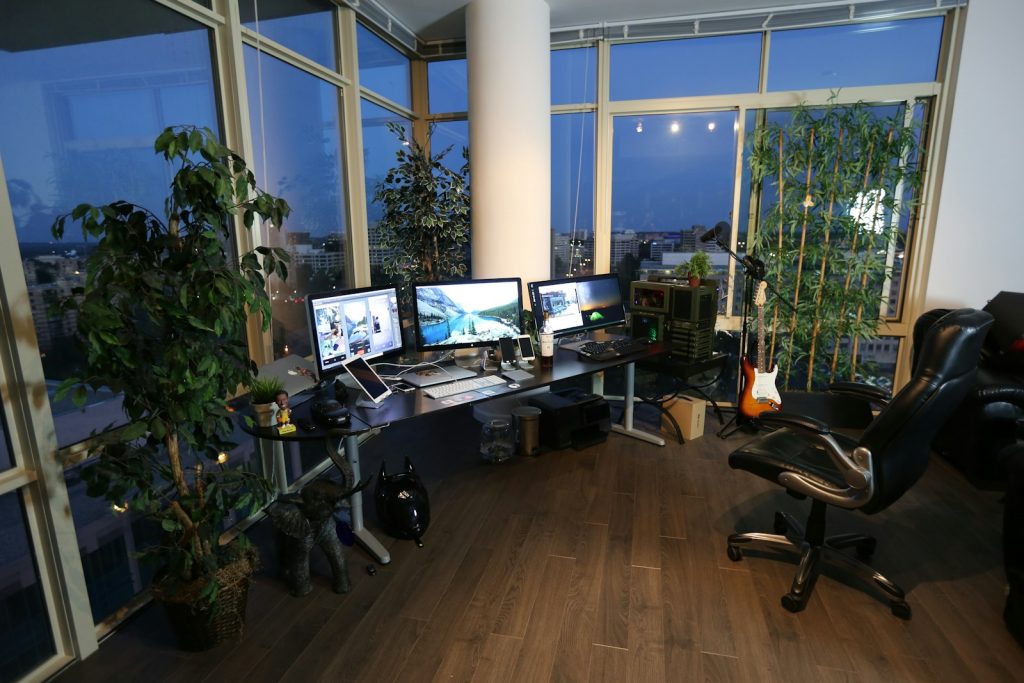
A good office should include, as we’ve mentioned, natural light, and high-quality ergonomic furniture. We might add to this duo a few well-selected plants. More broadly, the environment should be designed and maintained in a way that supports human well-being and flourishing. In fact, this is desirable not just in an office, but in any space in which work is being performed.
If you treat well-being as fundamental, rather than an afterthought, then you’re more likely to end up with a mentally healthy, engaged and productive workforce.
Building a sense of belonging
Human beings naturally crave a sense of community. They want to be part of a team, rather than just occupied with a stream of arbitrary tasks.
A sense of community can be fostered over time through shared ritual, as well as the design of the space. This might mean holding special events where colleagues are encouraged to interact with one another, and to recognise the performance of the employees who are really doing well. If you can get employees to invest their emotions and sense of purpose into their workplace, then they might be much more likely to want to come back to it.